Glossary
Explore the key concepts behind force plate analysis, biomechanics, and motion data. Clear definitions to deepen your understanding and elevate your coaching.
Force
Centripetal Force
Ground Reaction Force
1st Newton Law
2nd Newton Law
3rd Newton Law
Vector
Torque
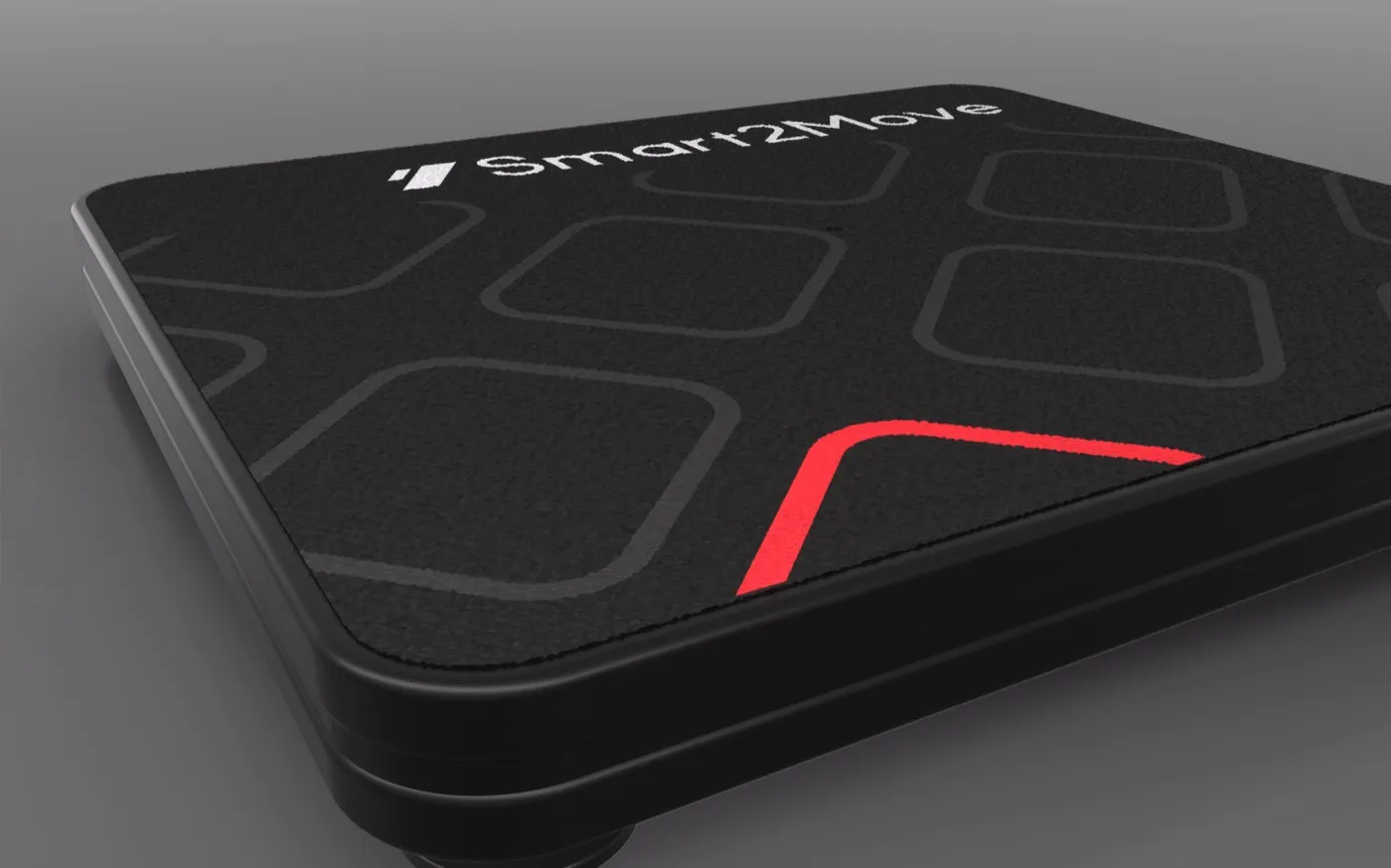
Force Plate
Biomechanics
Physiology
Physics
Center of Pressure
Center of Mass
Lateral Weight Distribution
High Speed Video
Swing Keyframes
Pre-shot Stance
Target Data
Pressure
Balance
Kinematics
Inertia
Kinetics
Kinetic energy
Motion
Force
In physics, a force is an interaction that, when unopposed, will change the motion of an object. In other words, a force can cause an object with mass to change its velocity, that means accelerate (+ or -). Force can also be described by intuitive concepts such as a push or a pull. A force has both magnitude and direction, making it a vector quantity. Its symbol is F, and its unit is newton (N). A force is a power that causes an object to move or that changes movement.
Centripetal Force
A centripetal force is a force that makes a body follow a curved path. Its direction is always orthogonal to the motion of the body and towards the fixed point of the instantaneous center of curvature of the path. Isaac Newton described it as "a force by which bodies are drawn or impelled, or in any way tend, towards a point as to a centre". In Newtonian mechanics, gravity provides the centripetal force responsible for astronomical orbits. Centripetal force is the force that pulls an object that is moving in a circle toward the center of the circle.
Ground Reaction Force
In physics, and in particular in biomechanics, the ground reaction force (GRF) is the force exerted by the ground on a body in contact with it. For example, a person standing motionless on the ground exerts a contact force on it and at the same time an equal and opposite ground reaction force is exerted by the ground on the person.
1st Newton Law
When viewed in an inertial reference frame, an object either remains at rest or continues to move at a constant velocity, unless acted upon by a force.
2nd Newton Law
The vector sum of the forces F on an object is equal to the mass m of that object multiplied by the acceleration vector a of the object: F = ma.
3rd Newton Law
When one body exerts a force on a second body, the second body simultaneously exerts a force equal in magnitude and opposite in direction on the first body.
Vector
In mathematics, physics and engineering, a Euclidean vector is a geometric object that has magnitude (length) and direction, and can be added to other vectors according to vector algebra. Euclidean vector is frequently represented by a line segment with a definite direction, or graphically as an arrow, connecting an initial point A with a terminal point B. Something physical such as a force that has size and direction.
Torque
Torque, moment, or moment of force is the tendency of a force to rotate an object about an axis. A force that causes something to rotate.
Force Plate
Force platforms or force plates are measuring instruments that measure the ground reaction forces generated by a body standing on or moving across them, to quantify balance, gait and other parameters of biomechanics. Most common areas of application are medicine and sports.
Biomechanics
Biomechanics is the study of the structure and function of biological systems such as humans, animals, plants, organs and cells by means of the methods of mechanics. The study of the effects of physical forces on living structures and their movement.
Physiology
Physiology is the scientific study of the normal function in living systems. A sub-discipline of biology, its focus is in how organisms, organ systems, organs, cells and biomolecules carry out the chemical or physical functions that exist in a living system. The scientific study of the way in which the bodies of living things work.
Physics
It means from ancient greek « knowledge of nature ». It's the natural science that involves the study of matter and its motion through space and time, along with related concepts such as energy and force. One of the most fundamental scientific disciplines, the main goal of physics is to understand how the universe behaves. The scientific study of matter and the effects that they have on each other.
Center of Pressure
In biomechanics, the CoP is the term given to the point of application of the ground reaction force vector. It represents the sum of all forces acting between a physical object and its supporting surface.
Center of Mass
In physics, the center of mass of a distribution of mass in space is the point where the weighted relative position of the distributed mass sums to zero or the point where if a force is applied causes it to move in direction of force without rotation.
Lateral Weight Distribution
A way to indicate how your weight is distributed in percentage under left foot and right foot. This distribution of forces indicates in which direction your center of pressure is moving during a golf swing.
High Speed Video
With the SmartBalance Pro app, the video camera is synchronized with data of force plate at 120 data and video frames per second.
Swing Keyframes
To analyse your performance, you can set key moments of your swing with markers on the video & graph of your app (SmartBalance Pro and SmartBalance Light). These are the following keyframes available: Address, Backswing, Top swing, Downswing, Impact, Follow through and Finish.
Pre-shot Stance
To detect the position of your feet on the force plate, the SmartBalance Pro App has a function to detect and draw footprints on the force plate. Then you can analyze the CoP displacement under each of your feet accurately.
Target Data
To evaluate your performance at the different Key position of your swing, your App (Pro & Light) gives you reference data of high level players. This can help you to evaluate your motion and identify data of your balance and force compared to reference players. These target data are an indication and do not represent the only way or perfect way to make a swing.
Pressure
Pressure is the force applied perpendicular to the surface of an object per unit area over which that force is distributed.
Balance
The balance of a body is stable when the vertical projection of the center of gravity remains in the base of support! Equal state: a state where things are of equal weight or force.
Kinematics
Kinematics is the branch in classical mechanics which describes the motion of points (or particles), bodies (or objects), and systems of bodies without consideration of the masses of those objects or the forces that may have caused the motion. The scientific study of a physical point displacement.
Inertia
Inertia is the resistance of any physical object to any change in its state of motion (this includes changes to its speed, direction or state of rest). It is the tendency of objects to keep moving in a straight line at constant velocity. The physical force that keeps something in the same position or moving in the same direction.
Kinetics
In Physics and engineering, kinetics is a term for the branch of classical mechanics that is concerned with the relationship between the motion of bodies and its causes, namely forces and torques. It is also known by the terms "Dynamics" or "analytical dynamics". The scientific study of forces on things that are moving.
Kinetic energy
In physics, Energy is a property of objects which can be transferred to other objects or converted into different forms. The « ability of a system to perform work » is a common description. The kinetic energy of an object is the energy that it possesses due to its motion. It is defined as the work needed to accelerate a body of a given mass from rest to stated velocity. Having gained this energy during its acceleration, the body maintains this kinetic energy unless its speed changes. The same amount of work is done by the body in decelerating from its current speed to a state of rest. The power from something such as electricity or muscle that can do work, such has providing light or motion. Kinetic energy: energy that an object or system has because it is moving.
Motion
In physics, motion is a change in position of an object with respect to time. Motion is typically described in terms of displacement, distance, velocity, acceleration, time and speed. Motion of a body is observed by attaching a frame of reference to an observer and measuring the change in position of the body relative to that frame. The act or process of moving. Displacement, distance, velocity, speed, acceleration, angular velocity, time…